
What Makes Fiberglass Different from Other Materials
When something made of fiberglass gets cracked, chipped, or structurally compromised, fiberglass repair is not as simple as slapping on some filler and calling it done. Fiberglass is a composite material — woven glass fibers embedded in a resin matrix — and restoring it properly means understanding how those two components work together. Unlike metal, which can be welded, or wood, which can be patched with putty, fiberglass requires a layered, chemical bonding process to regain its original strength.
This matters whether you’re dealing with a cracked bathtub, a damaged boat hull, a broken bumper, or a compromised pool shell. Each application has its own requirements, but the underlying principles of the repair process stay consistent.
Common Types of Fiberglass Damage
Not all fiberglass damage looks the same, and identifying what you’re dealing with is the first step toward a proper fix.
**Surface cracks (gelcoat cracks):** These are shallow cracks in the outer protective layer. They don’t always affect structural integrity but can allow moisture to seep in over time, leading to deeper problems.
**Stress cracks:** These radiate outward from a point of impact or repeated flexing. They often indicate that the underlying laminate has been stressed, even if it hasn’t fully fractured.
**Delamination:** This happens when the layers of fiberglass separate from each other, often due to water intrusion. Affected areas feel soft or spongy when pressed.
**Through-holes and fractures:** Full breaks in the material that require rebuilding from the inside out using new fiberglass cloth and resin.
Knowing which type of damage you have determines what materials and techniques the repair actually requires.
The Repair Process Step by Step
A quality fiberglass repair follows a methodical sequence. Skipping steps is one of the most common reasons repairs fail prematurely.
1. **Assess and clean the area.** All dirt, wax, and loose material must be removed. Moisture is the enemy of resin adhesion, so the surface needs to be completely dry.
2. **Grind or sand back the damaged area.** This creates a feathered edge that allows new material to bond gradually rather than meeting a sharp cliff. For structural repairs, this step also removes weakened laminate.
3. **Apply fiberglass cloth and resin in layers.** Each layer needs to cure adequately before the next is applied. Rushing this stage leads to trapped air bubbles and weak bonds.
4. **Build back to the original contour.** Once the structural layers are solid, the surface is built up with fairing compound or gelcoat to restore the original shape.
5. **Sand and finish.** Progressive sanding grits smooth the repair, and a final polish or gelcoat application blends the repair into the surrounding surface.
The goal is a repair that is structurally sound and visually seamless.
Why DIY Attempts Often Fall Short
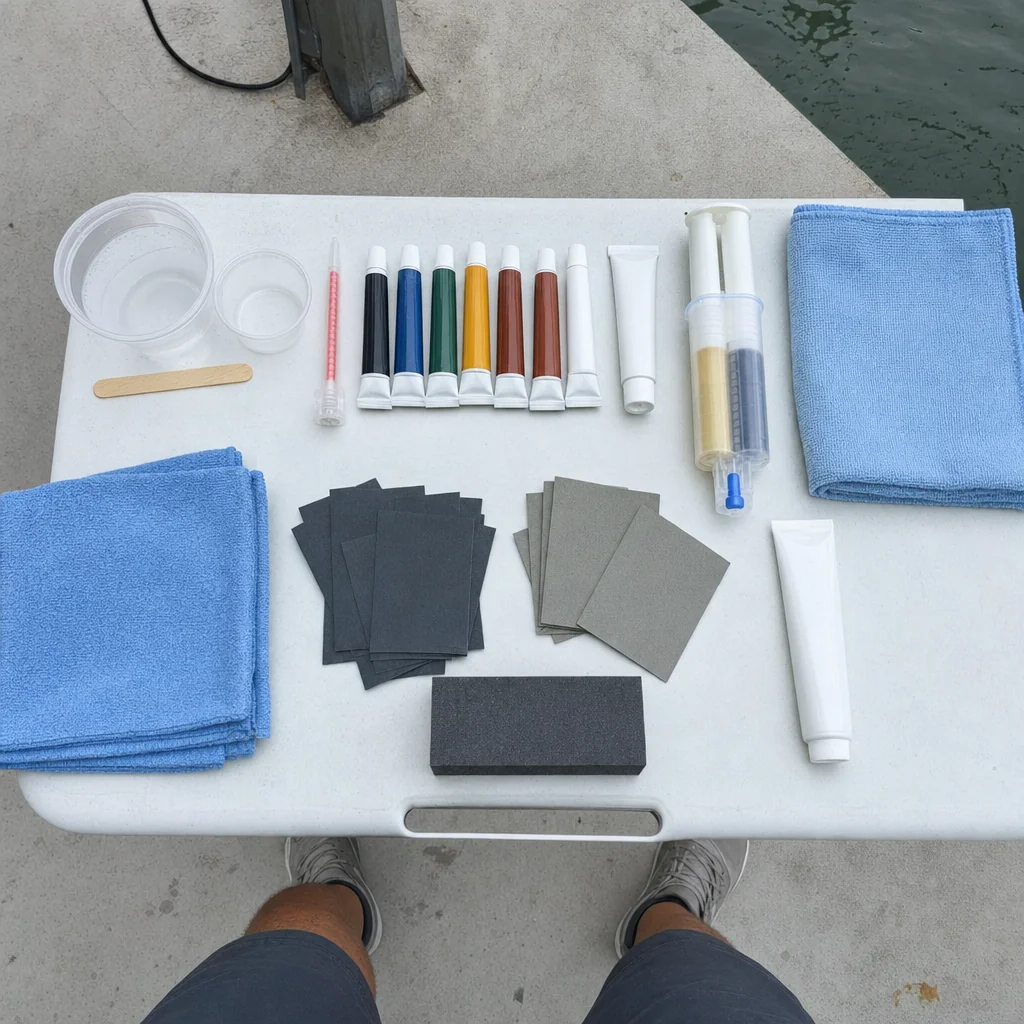
Hardware store fiberglass repair kits can handle very minor cosmetic fixes, but they have real limitations. Most consumer-grade products use lower-quality resins that are more brittle and less UV-stable than professional materials. The mixing ratios for resin and hardener are also unforgiving — too much or too little catalyst and the material either won’t cure properly or becomes too rigid.
Beyond materials, technique matters enormously. Professionals understand how to read the damage, identify hidden delamination that isn’t visible on the surface, and apply materials in conditions that support proper curing. A repair that looks fine on day one can crack, discolor, or separate within a season if the process wasn’t done correctly.
For anything structural — a boat hull, a load-bearing panel, a pool shell — professional assessment and repair is the safer and more cost-effective choice in the long run.
How to Choose the Right Local Service Provider
Fiberglass work requires specific experience, and not every general contractor or body shop has it. When looking for someone to handle a repair, a few things are worth checking:
- **Ask about their experience with your specific type of item.** Boat repair and bathtub repair both involve fiberglass, but the materials and techniques differ.
- **Request to see examples of past work.** A skilled technician should be able to show repairs that are smooth, well-matched in color, and durable over time.
- **Get clarity on what the repair includes.** Does the quote cover structural work, surface finishing, and color matching? Vague quotes often lead to surprise add-ons.
- **Ask about warranty or guarantee.** Reputable local shops stand behind their work.
Fiberglass is a durable, versatile material — but only when it’s properly maintained and repaired. Taking the time to get a repair done right the first time protects your investment and prevents small problems from becoming expensive ones.