
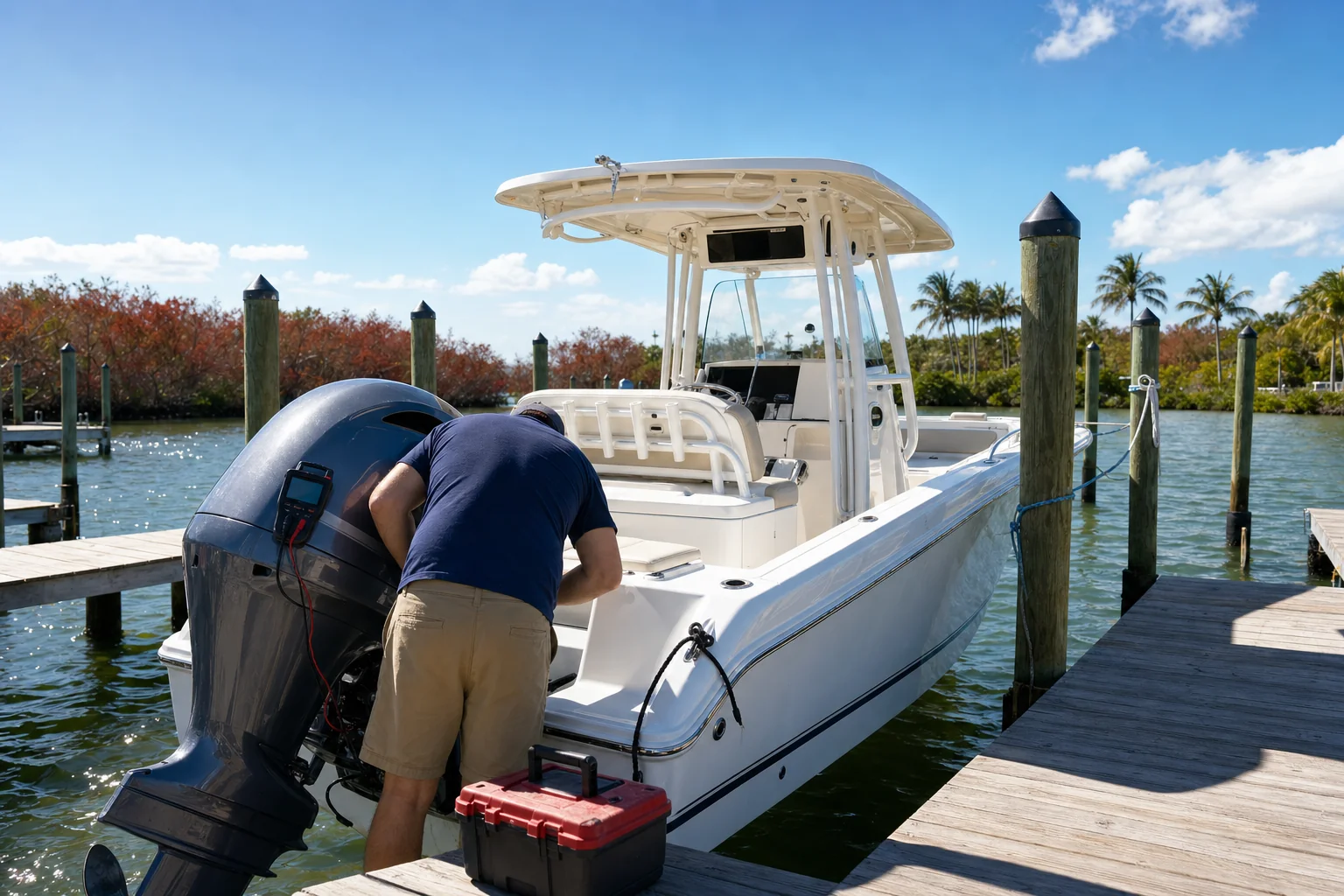
Recognizing the Warning Signs Early
Most outboard motor problems don’t appear out of nowhere. They build gradually, giving you small clues before they turn into expensive failures. Scheduling outboard repair at the first sign of trouble is almost always cheaper than waiting until the motor quits on the water. Common early warning signs include rough idling, difficulty starting, unusual smoke from the exhaust, a noticeable drop in top speed, or the motor cutting out under load.
If you notice any of these symptoms, resist the urge to keep running the motor and hope it clears up on its own. Outboard engines are precision machines, and running them in a compromised state can turn a minor carburetor issue into a damaged powerhead — a repair that costs many times more.
Common Outboard Problems and Their Causes
Understanding what typically goes wrong helps you have a more informed conversation with your technician and set realistic expectations for cost and turnaround time.
**Fuel system issues** are among the most frequent. Old or contaminated fuel, clogged fuel filters, and gummed-up carburetors are especially common in motors that sit unused for months. Ethanol-blended fuel absorbs moisture and can degrade rubber components inside the fuel system.
**Cooling system failures** are serious and can escalate quickly. The water pump impeller — a small rubber component that circulates cooling water — wears out over time and should be replaced on a regular maintenance schedule. An overheating motor will shut itself down to prevent damage, but repeated overheating can warp cylinder heads.
**Ignition and electrical problems** often show up as hard starting or misfiring. Spark plugs, ignition coils, and stator assemblies are all wear items. Saltwater environments accelerate corrosion on electrical connections, making regular inspection especially important for boaters in coastal areas.
**Lower unit issues**, including gear oil leaks and damaged propeller shafts, are often caused by striking underwater objects. Even a minor impact can bend a shaft or damage seals, allowing water into the gear case and causing significant internal damage over time.
What Happens During a Professional Outboard Inspection
When you bring your motor to a qualified marine technician, they’ll typically start with a full visual inspection, looking for obvious damage, corrosion, leaks, and wear. From there, they’ll run the motor on a flush muff or in a test tank to observe how it performs under simulated load.
Diagnostic tools are used to check ignition timing, fuel delivery, and compression in each cylinder. Low compression in one or more cylinders is a key indicator of internal engine wear. The technician will also check the gear oil in the lower unit for a milky appearance, which signals water contamination from a failed seal.
After the inspection, a reputable shop will walk you through their findings and give you a written estimate before any work begins. Don’t hesitate to ask questions — a good technician will explain what failed, why it failed, and what they recommend to prevent the same issue from recurring.
DIY vs. Professional Repair: Where to Draw the Line
Some maintenance tasks are reasonable for a mechanically confident boat owner to handle. Changing spark plugs, replacing a fuel filter, flushing the motor after saltwater use, and changing gear oil in the lower unit are all within reach if you follow your owner’s manual carefully.
However, anything involving internal engine components, the fuel injection system, electrical diagnostics, or the lower unit gears should generally be left to a certified technician. Outboard motors have tight tolerances and require specific torque specs, specialized tools, and access to manufacturer service manuals. An incorrect repair can create a safety hazard on the water or void any remaining warranty coverage.
The cost of professional labor is often justified simply by the accuracy of the diagnosis. Replacing parts at random hoping to fix a problem is rarely cost-effective.
Keeping Your Outboard in Shape Between Service Visits
Regular maintenance is the single best way to reduce repair costs over the life of your motor. A few habits make a significant difference:
- **Flush with fresh water** after every saltwater or brackish water use.
- **Use a fuel stabilizer** if the motor will sit unused for more than 30 days.
- **Inspect the propeller** regularly for nicks, dings, or fishing line wrapped around the shaft.
- **Change the gear oil** in the lower unit at least once per season or per the manufacturer’s recommendation.
- **Follow the service interval** for water pump impeller replacement — typically every two to three years depending on usage.
Building a relationship with a trusted local marine service shop also pays off. Technicians who know your motor’s history can spot developing problems faster and keep accurate service records that matter when it’s time to sell the boat.